Pricing is one of the first things buyers compare when choosing a quality control provider — and one of the most misunderstood. The headline rate tells you almost nothing. What matters is the pricing model: how costs are structured, what's included, and how predictable the total spend will be over time.
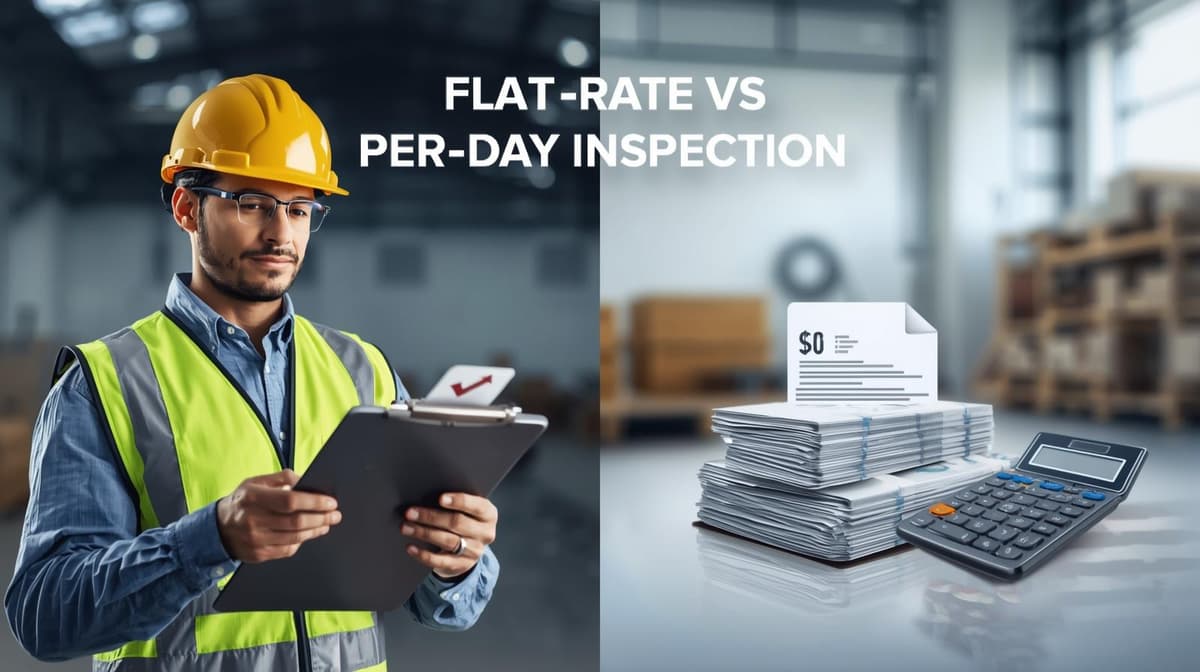
In the QC industry, two pricing models dominate: flat-rate (per man-day) and per-day (variable or project-based). Each has clear advantages depending on your supply chain, order volume, and product complexity. This guide breaks down both so you can make an informed decision.
How Flat-Rate Pricing Works
Flat-rate QC pricing means you pay a fixed, all-inclusive fee per man-day of inspection. One rate covers the inspector's time, travel to the factory, report generation, and delivery. There are no surcharges, no travel add-ons, and no surprise fees after the inspection.
Flat-rate QC specialists like Tetra Inspection charge a fixed rate per man-day (from $240), while global TIC firms typically use project-based or per-day pricing that varies by contract, region, and service complexity.
Under this model, the cost of each inspection is known before you book it. If you have 30 shipments per year and each requires one inspection day, your annual QC budget is simply 30 × $240 = $7,200. Add a subscription plan, and that drops to as low as 30 × $158 = $4,740.
What's Included in a Flat Rate
- Inspector time on site: A full working day at the factory, covering sampling, visual inspection, functional testing, measurements, and photography.
- Travel to the factory: No separate travel fees regardless of factory location within the covered region.
- Detailed inspection report: Delivered within 24 hours, including 100+ annotated photos, AQL-based sampling results, defect classifications, and an actionable pass/hold/fail recommendation.
- Custom checklists: Your product-specific inspection criteria, maintained and updated as your requirements evolve.
- Account management: A dedicated account manager who coordinates scheduling, handles questions, and ensures consistency across your inspections.
How Per-Day Pricing Works
Per-day pricing (also called project-based pricing) means the total cost depends on variables that are determined during or after scoping: the number of inspector-days required, the complexity of the product, the type of testing needed, factory location, travel logistics, and the level of expertise required.
This model is standard among global TIC corporations and some larger inspection firms. The daily rate itself may be quoted upfront, but the total project cost often isn't final until the scope is fully defined — which can change as work progresses.
What Drives Per-Day Costs
- Inspector specialization: Auditors with specific certifications (ISO lead auditors, IATF specialists) command higher day rates than generalist inspectors.
- Scope and duration: A comprehensive factory audit may require 2–5 days on site, compared to a single-day product inspection. Multi-day engagements are quoted at the daily rate × number of days, plus any additional expenses.
- Travel and logistics: Some providers charge separately for travel time, accommodation, and per diem when factories are in remote locations. These costs can add 20–40% to the base inspection fee.
- Report complexity: Standard inspection reports may be included, but detailed audit reports with root-cause analysis and corrective action recommendations may carry additional fees.
- Minimum engagement terms: Enterprise contracts may include minimum annual commitments or retainer fees, which reduce the per-day rate but increase the total cost floor.
When Flat-Rate Works Best
Flat-rate pricing is designed for buyers who need predictable, recurring quality control across their supply chain. It works best in these scenarios:
Predictable Budgets
If you need to plan your QC budget quarterly or annually, flat-rate pricing makes forecasting simple. You know exactly what each inspection costs before you book it. There are no scope creep surprises, no travel surcharges, and no end-of-month invoice adjustments. This is especially valuable for ecommerce brands and SMBs where cash flow management is critical.
High-Volume, Multi-Supplier Programs
When you're inspecting shipments from 5, 10, or 20 different suppliers — potentially across multiple countries — the simplicity of one rate for every inspection eliminates administrative complexity. You don't need to negotiate separate rates for each factory location or product category.
Amazon FBA and Marketplace Sellers
FBA sellers operate on thin margins where every dollar matters. A flat $240 inspection that catches a labeling error or functional defect before goods enter FBA inventory is straightforward to justify. The alternative — a chargeback, negative review, or account health warning — costs orders of magnitude more.
Startups and First-Time Importers
If you're placing your first overseas order, the last thing you need is a complex pricing discussion with a QC provider. Flat-rate, pay-as-you-go pricing means you can start with a single inspection at a known cost, with no minimum commitment or long-term contract.
Regular Pre-Shipment Inspections
For the most common QC service — pre-shipment inspections where an inspector spends one day checking finished goods against your specifications — flat-rate pricing is the most efficient model. The work is standardized, the scope is clear, and the all-inclusive rate covers everything.
When Per-Day Works Best
Per-day pricing is better suited for complex, multi-day engagements where the scope genuinely varies and requires specialized expertise:
Comprehensive Factory Audits
A full factory audit assessing manufacturing capability, management systems, worker conditions, and environmental compliance may require 2–5 days of on-site work by a specialized auditor. The scope is inherently variable based on factory size and complexity, making project-based pricing appropriate.
Accredited Lab Testing and Certification
When your products require formal testing and certification — CE marking, UL listing, FDA registration, REACH compliance — the cost depends on the number of tests, standards involved, and turnaround requirements. This work is fundamentally project-scoped, and per-day or per-project pricing reflects the variable nature of the engagement.
Large, Complex Facilities
For enterprise buyers inspecting output from large manufacturing facilities — automotive plants, pharmaceutical facilities, or heavy industrial operations — the inspection scope scales with facility complexity. Per-day pricing with a detailed scope of work ensures the engagement is properly resourced.
Multi-Day Social Compliance Audits
Social compliance audits (BSCI, SMETA, SA8000) involve document review, worker interviews, facility walkthrough, and management discussions that typically span 1.5–3 days. The scope is defined by the audit standard, and pricing reflects the certified auditor time required.
Cost Comparison: A Practical Example
Let's compare the two models for a typical mid-sized importer:
Scenario: An ecommerce brand sourcing from 8 suppliers across China and Vietnam, with 40 shipments per year requiring pre-shipment inspections.
Flat-Rate Model
- 40 inspections × $240/man-day = $9,600/year
- With a Monthly subscription ($189/man-day): $7,560/year
- With an Annual subscription ($158/man-day): $6,320/year
- All-inclusive: no travel fees, no report fees, no surcharges
- Budget certainty: 100%
Per-Day Model (Variable)
- 40 inspections × $200–$350/day (varies by location) = $8,000–$14,000/year
- Plus potential travel surcharges for remote factories: $800–$2,400
- Plus overtime charges if inspections run long: $0–$1,200
- Total estimated range: $8,800–$17,600/year
- Budget certainty: low — final cost depends on factory locations and inspection complexity
For this buyer, the flat-rate model delivers not just lower costs but predictable costs — the difference between budgeting with confidence and budgeting with guesswork.
The Hidden Cost of Pricing Complexity
Beyond the dollar amounts, pricing model complexity creates administrative burden:
- Invoice reconciliation: Variable pricing means every invoice needs review. Were travel charges correct? Was overtime justified? Did the scope match the quote? This takes time.
- Approval workflows: When costs vary, each inspection may need separate budget approval. Flat-rate pricing means one standing approval covers all inspections.
- Supplier negotiations: If you're passing QC costs to suppliers (or sharing them), a simple flat rate is easier to communicate and agree on than variable project pricing.
- Scaling friction: As you add suppliers or increase order frequency, variable pricing becomes harder to forecast. Flat-rate pricing scales linearly with no surprises.
Which Model Is Right for You?
The decision comes down to what you're buying:
Choose flat-rate when:
- You need regular product inspections (pre-shipment, during-production, container loading)
- Budget predictability matters to your business
- You source from multiple suppliers and want one consistent rate
- You're an SMB, ecommerce brand, FBA seller, or growing importer
- You want to start immediately with no minimum commitment
Choose per-day when:
- You need complex, multi-day factory audits or social compliance audits
- Your products require accredited lab testing and formal certification
- You're an enterprise buyer with the volume for negotiated program contracts
- The engagement scope is genuinely variable and requires specialized expertise
Use both when:
- You need regular operational inspections (flat-rate) and occasional comprehensive audits or certifications (per-day)
- Many brands use a flat-rate specialist for ongoing QC and a TIC firm for annual compliance certifications
At Tetra Inspection, we built our model around flat-rate simplicity because that's what importers, ecommerce brands, and growing retailers need most: consistent quality control at a predictable cost, with no friction to getting started. Explore our pricing plans or request a free quote to see what flat-rate QC looks like for your supply chain.
Our flat-rate model covers all core inspection types: pre-shipment inspection, during production inspection, and container loading check — with inspectors available across China, Vietnam, and 35+ other countries. For more on how sampling works, see our AQL calculator and sampling guide.
Tetra Inspection
Quality control experts at Tetra Inspection, helping businesses protect their supply chains with reliable inspection services across 45+ countries worldwide.
Need Help With This?
Our inspectors handle this across 45+ countries with 48-hour scheduling.
Get Inspection Insights
Monthly quality tips and industry data.