Supplier Verification Audit
A supplier verification audit is an independent assessment that confirms a supplier's legal status, business legitimacy, production capabilities, and operational history to mitigate sourcing risks before placing orders.
In-depth verification of supplier legitimacy and compliance, validating they meet required standards and regulations.
Get a QuoteStarting from $240/man-day · No hidden fees

How Supplier Verification Audit Works
Background Research
We collect and verify publicly available business registration data, export records, and company information before the on-site visit.
Business License Verification
The auditor verifies the supplier's business license, tax registration, export licenses, and any industry-specific certifications or permits.
On-Site Facility Inspection
An unannounced or scheduled visit confirms the factory exists, is operational, and matches the supplier's claimed production capabilities and capacity.
Management Interview
Key management personnel are interviewed to assess their industry knowledge, production expertise, and the company's operational history and client base.
Verification Report
A comprehensive report details all findings, including verified and unverified claims, risk assessment, and a clear recommendation on the supplier's reliability.
Key Benefits of Supplier Verification Audit
Confirm the supplier is a legitimate, legally registered business entity
Verify that the factory exists and has real production facilities — not just a showroom
Protect against trading company fraud and middlemen misrepresenting themselves as manufacturers
Assess the supplier's actual production capacity and export capabilities
Validate claimed certifications, licenses, and industry accreditations
Reduce sourcing risk before committing to large purchase orders or long-term contracts
About Supplier Verification Audit
Tetra Inspection's supplier verification audit is an essential due-diligence step for any importer onboarding a new factory. Our supplier verification process sends an experienced auditor directly to the supplier's facility to confirm that the manufacturer is legitimate, operational, and capable of producing your products at the required quality and volume. This supplier audit protects you against trading companies, fraudulent entities, and exaggerated capabilities — risks that are especially high when sourcing through online marketplaces. We perform supplier verification audits across China, Vietnam, India, and 44+ countries with reports delivered within 24 hours.
What Is a Supplier Verification Audit?
A supplier verification audit is an independent due-diligence investigation that confirms whether a supplier is who they claim to be, is legally registered and operational, and has the actual capabilities to fulfill your production requirements. This service is critical when onboarding new suppliers — particularly those found through online marketplaces like Alibaba, Global Sources, or Made-in-China — where the risk of encountering trading companies, middlemen, or fraudulent entities is significant.
The global sourcing landscape is filled with suppliers who present polished websites, impressive certifications, and competitive quotes — but may not have the factory, equipment, or track record to actually deliver. Industry estimates suggest that 15–30% of suppliers listed on major B2B marketplaces are trading companies or intermediaries rather than actual manufacturers. A supplier verification audit cuts through the marketing by placing an independent auditor on-site at the supplier's claimed location to verify the facts on the ground and provide you with an objective assessment of the supplier's true identity and capabilities.
What Supplier Verification Includes
Our supplier verification audit covers every aspect of the supplier's business legitimacy and operational reality:
Business License Verification
The auditor verifies the supplier's business registration documents against government records. In China, this means checking the business license (营业执照) against the National Enterprise Credit Information Publicity System. In Vietnam, India, and other countries, equivalent government databases are consulted. The auditor confirms the company's registered name, registration number, legal representative, registered capital, business scope, and registration date. Discrepancies between the supplier's claims and official records are documented as red flags.
Facility Verification
The auditor visits the supplier's claimed factory address to confirm that a manufacturing facility actually exists at that location. This is one of the most critical verification steps: it is surprisingly common for online marketplace listings to show borrowed factory photos, display addresses of other companies, or present a warehouse or trading office as a "factory." The auditor photographs the facility exterior, signage, production areas, and equipment, documenting whether the location matches the supplier's representations.
Key verification points include: Does the factory signage match the company name? Is there actual production equipment on-site? Are workers actively producing goods? Does the facility size correspond to the claimed production capacity? Is there evidence that this is the supplier's own factory versus a subcontracted or rented facility?
Production Capability Assessment
Beyond confirming the factory exists, the auditor assesses whether it has the actual capability to produce your products. This includes evaluating the types and quantity of production machinery, the current production load (is the factory already at full capacity?), the workforce size and apparent skill level, the range of products currently being manufactured, and any specialized equipment needed for your product type.
This assessment helps you distinguish between a factory that genuinely specializes in your product category and one that claims broad capabilities but lacks the specific equipment or expertise you need. A factory listing "electronics, textiles, and furniture" as product categories on Alibaba is almost certainly a trading company — real manufacturers specialize.
Financial Health Check
Where available, the auditor checks the supplier's financial indicators: registered capital, years in operation, export volume records (available through customs data in some countries), and any legal proceedings or debt records. While a supplier verification is not a full financial audit, these indicators help assess business stability. A newly registered company with minimal capital making large production promises represents a higher risk than an established manufacturer with years of export history.
Export Documentation and Compliance
The auditor verifies that the supplier has valid export licenses, customs registration, and the administrative capability to handle international shipping documentation — including commercial invoices, packing lists, certificates of origin, and any product-specific compliance documentation required by your destination market.
Certification and Accreditation Verification
Many suppliers claim ISO 9001, ISO 14001, SA 8000, or product-specific certifications. The auditor requests original certificates, verifies certificate numbers with issuing bodies where possible, and checks validity dates. Expired, forged, or purchased certificates from non-accredited bodies are a common issue, particularly among smaller manufacturers.
Red Flags That Indicate Supplier Risk
Our auditors are trained to identify warning signs that indicate potential problems:
- Address mismatch — The factory is not at the registered business address, or the address leads to a residential area, empty lot, or unrelated facility.
- No production equipment — The location has a showroom or office but no actual manufacturing equipment, indicating a trading company posing as a manufacturer.
- Restricted access — The supplier refuses to allow the auditor into production areas, citing "confidentiality" or "security." Legitimate factories understand that transparency is part of doing business with international buyers.
- Capacity inconsistency — The factory's actual size and equipment cannot support the production volumes claimed during sales negotiations.
- Subcontracting evidence — Products from multiple different factories are found on-site, or workers are unfamiliar with the products the supplier claims to manufacture. This suggests the supplier outsources production without disclosure.
- Certificate issues — Certifications are expired, from unrecognized bodies, or cannot be verified with the stated issuing organization.
- Management evasion — Key contacts from sales negotiations are unavailable, or management cannot answer basic questions about their own production processes.
When to Use Verification vs. Full Factory Audit
Supplier verification and factory audits serve different purposes and are appropriate at different stages of the supplier evaluation process:
A supplier verification audit answers the question: "Is this supplier real, legitimate, and worth considering?" It is the first step — confirming business identity, facility existence, and basic capabilities. Think of it as a background check on the company itself.
A factory audit answers the question: "Can this factory produce my products at the required quality level?" It goes deeper into quality management systems, process controls, equipment condition, and operational practices. Think of it as a technical capability assessment.
The recommended approach for new suppliers is to conduct both, typically in sequence: verify the supplier first, then — if verification passes — conduct a full factory audit to evaluate manufacturing capabilities in detail. For established suppliers that you have worked with for years, a factory audit alone is usually sufficient since their legitimacy is already established through your transaction history.
For time-sensitive evaluations, we can often combine both services into a single on-site visit, delivering a comprehensive verification and capability assessment report within 48 hours.
Supplier Verification by Sourcing Region
The specific verification checks and risk profiles vary by country:
- China — The largest sourcing market and the one with the highest volume of trading companies posing as manufacturers on platforms like Alibaba and 1688. Business license verification through China's NECIPS system is straightforward. Export records can often be cross-referenced through customs data services.
- Vietnam — A rapidly growing manufacturing hub where many factories are newer and less established. Verification focuses on factory ownership, actual operating history, and capacity relative to claims. Some Vietnamese factories operate as satellites of larger Chinese or Korean parent companies.
- India — Business registration verification through the Ministry of Corporate Affairs. India's manufacturing sector is diverse and fragmented, with a wide range of factory sizes and capabilities. Verification is particularly important for SME suppliers.
- Turkey — Trade registry verification through the Turkish Trade Registry Gazette. Turkey is a significant sourcing market for textiles, furniture, and food products, with generally higher transparency in business documentation.
- Bangladesh — A major garment manufacturing hub where verification focuses on factory ownership, compliance certifications (BSCI, WRAP, OEKO-TEX), and production capacity. Many Bangladeshi factories serve as contract manufacturers for global brands, so verifying exclusive vs. shared capacity is important.
Regardless of the sourcing country, the fundamental verification methodology remains the same: confirm business registration, visit the physical facility, assess actual capabilities, check certifications, and interview management. Our local auditors understand the business customs, regulatory frameworks, and common fraud patterns specific to each country, allowing them to conduct more thorough and effective verifications than a generalized checklist approach would allow.
Announced vs. Unannounced Verification Visits
Tetra Inspection offers both announced and unannounced supplier verification visits, each with distinct advantages:
Announced visits are scheduled in advance with the supplier's cooperation. This approach ensures that management is available for interviews and that relevant documentation (business licenses, certifications, export records) is prepared. Announced visits are appropriate when you have a positive preliminary relationship with the supplier and want a collaborative evaluation. Unannounced visits are conducted without prior notice to the supplier. The auditor arrives at the factory and requests access for verification. Unannounced visits are more revealing because they show the factory in its normal operating state — without preparation or staging. They are particularly recommended when you have concerns about a supplier's legitimacy, when the supplier has been evasive about providing information, or when you suspect that the supplier may be a trading company rather than a manufacturer. Some suppliers will refuse entry to an unannounced auditor, which in itself is a significant red flag worth noting in the verification report.The True Cost of Skipping Supplier Verification
Importers who skip supplier verification to save time or money often pay a far higher price later. Common consequences of working with unverified suppliers include:
- Payment fraud — Sending deposits or full payment to entities that have no real factory and no intention of delivering products. Wire transfer fraud in international trade causes billions of dollars in losses annually, and a basic verification audit costs a fraction of even one fraudulent payment.
- Quality failures — Trading companies that outsource production to the cheapest available factory have no control over quality. The products you receive may bear no resemblance to the samples you were shown.
- Delayed deliveries — Suppliers who misrepresent their capacity accept orders they cannot fulfill on time. You discover the delay only when your shipping window has closed.
- Compliance exposure — Products manufactured in facilities that lack proper certifications or quality controls may not meet regulatory requirements in your market, creating legal liability and customs rejection risk.
- Intellectual property theft — Sharing product designs with unverified suppliers carries the risk of IP theft, unauthorized reproduction, or sales to your competitors.
A supplier verification audit typically costs less than a single sample shipment — and can prevent losses that are orders of magnitude larger. It is the most cost-effective risk mitigation tool available to international buyers.
How to Prepare for a Supplier Verification Audit
To get the most value from your supplier verification, prepare the following before booking:
- Supplier claims to verify — Document everything the supplier has told you: factory location, production capacity, certifications, years in business, key clients, and product specializations. The auditor will systematically verify each claim.
- Company registration details — Collect the supplier's registered company name, business license number, and address as provided in their correspondence or profile.
- Product specifications — If you want the auditor to assess whether the factory can produce your specific product, share your product specifications and requirements.
- Specific concerns — If you have particular worries (subcontracting, capacity, certifications), communicate these so the auditor can focus attention on those areas.
After Verification: Building Your Quality Control Program
Once your supplier passes verification, the next steps in building a robust supply chain relationship are:
- Factory Audit — Detailed evaluation of manufacturing capabilities and quality systems.
- Initial Production Check — Verify materials and first articles when your first order begins production.
- During Production Inspection — Monitor quality mid-production.
- Pre-Shipment Inspection — Final quality gate before shipment.
Tetra Inspection performs supplier verification audits across China, Vietnam, India, Turkey, Bangladesh, and 30+ manufacturing countries. Reports are delivered within 24 hours, with a clear recommendation on whether to proceed with the supplier and specific risk factors to monitor if you do.
Need Supplier Verification Audit?
Starting from $240/man-day · 48-hour scheduling
Free, no-obligation quote · We respond within 4 hours · Your details stay private
Supplier Verification Audit — Frequently Asked Questions
When should I conduct a Supplier Verification Audit?
Conduct a verification audit before placing your first order with a new supplier, especially if you found them on an online marketplace like Alibaba. It is also recommended when switching to a new supplier or when an existing supplier changes ownership or location.
Can you conduct unannounced supplier verification visits?
Yes. Unannounced visits are often more revealing as they show the factory in its normal operating state rather than a prepared presentation. We recommend unannounced visits when you have concerns about a supplier's legitimacy.
What red flags does a Supplier Verification Audit look for?
Key red flags include mismatched business registration and factory address, no actual production equipment on-site, reluctance to show production areas, inconsistencies between claimed and actual capacity, expired or forged certifications, and signs of subcontracting without disclosure.
How is this different from a Factory Audit?
A Supplier Verification Audit focuses on business legitimacy and credibility (is this supplier real and trustworthy?), while a Factory Audit focuses on manufacturing capability and quality systems (can this factory produce quality products?). Both are recommended for new suppliers.
Can Tetra coordinate audits and inspections through one provider?
Yes. Factory audits, social and SMETA compliance audits and product inspection run through one provider, one reporting standard and one platform — so a supplier's capability, working conditions and output are assessed together rather than through three separate vendors. Results stay comparable across factories and countries, in photo-documented reports delivered within 24 hours.
Is Tetra only for one-off inspections, or for ongoing supplier management?
Both. Beyond urgent one-off checks, Tetra supports ongoing supplier relationships through recurring audits, production monitoring and repeat supplier verification, with results tracked over time on one platform. Acceptance criteria stay standardised on ISO 2859-1 AQL sampling across every factory and country, which is what makes long-term supplier development possible rather than a series of disconnected visits.
Related Services
Latest Articles

Factory Audit vs Supplier Verification: Which Do You Need?
Factory audits and supplier verifications serve different purposes. This guide explains what each covers, when you need one versus the other, and how to decide which is right for your sourcing situation.
Read full article: Factory Audit vs Supplier Verification: Which Do You Need?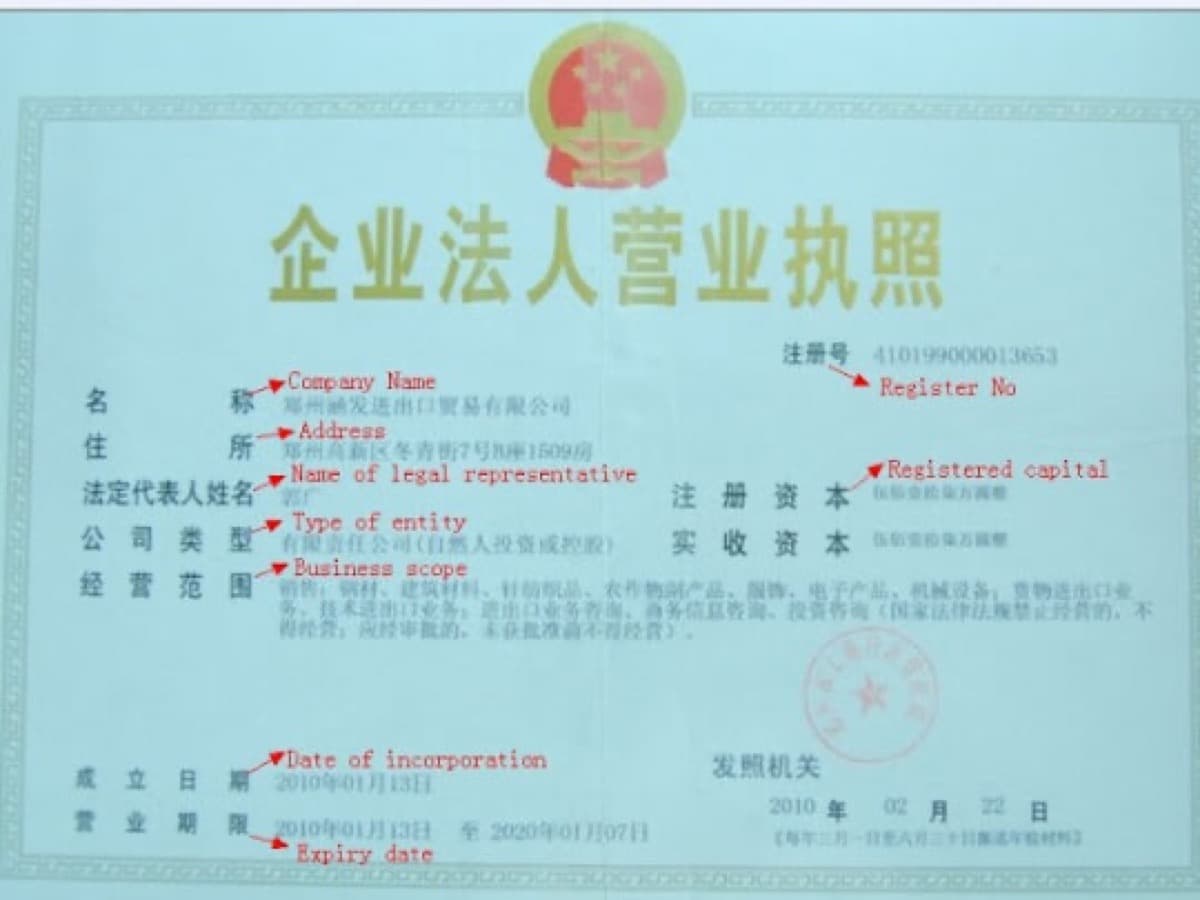
China Supplier Verification Audit
Most importers prefer to work with factories instead of placing their order to a trading company or middle man. However, almost all Chinese suppliers claim that they are factories, including Alibaba suppliers, although, in reality, they are commercial companies or worse; they are scammers.
Read full article: China Supplier Verification Audit
SMETA Audit Explained: What Importers Need to Know
A comprehensive guide to SMETA audits — what they are, the difference between 2-pillar and 4-pillar SMETA, which retailers require them, the audit process, how to prepare suppliers, and common non-conformances.
Read full article: SMETA Audit Explained: What Importers Need to KnowReady to Book Supplier Verification Audit?
Get a quote in minutes. Our inspectors are ready worldwide.
Average scheduling: 48 hours from booking