
Every importer eventually asks the same question: "Are inspections worth the cost?" The answer depends on math, not opinion. This guide gives you a simple ROI framework, real-world benchmarks, and practical rules of thumb for deciding when quality control inspections make financial sense.
The Basic ROI Formula
Quality control ROI is straightforward to calculate:
QC ROI = (Cost of Defects Avoided − Cost of Inspections) ÷ Cost of Inspections × 100
If a year of inspections costs you $15,000 and prevents $60,000 in defect-related losses, your ROI is:
($60,000 − $15,000) ÷ $15,000 × 100 = 300% ROI
The challenge isn't the formula — it's accurately estimating the "cost of defects avoided." Most buyers dramatically undercount defect costs because they only look at the obvious ones (returned units) and ignore the hidden ones (lost customers, marketplace penalties, brand erosion).
The True Cost of Defects
To calculate ROI accurately, you need to account for every category of defect-related cost:
Direct Costs
- Defective units: The wholesale cost of products that can't be sold. At a 5% defect rate on a $200,000 order, that's $10,000 in product write-offs.
- Return shipping and processing: Each consumer return costs $30–$180 depending on product size and category. A furniture return averages $180 in reverse logistics alone.
- Rework and replacement: If the factory agrees to rework defective units, you still pay for shipping delays and quality re-verification. If replacements are needed, production timelines reset.
- Customs rejections: Non-compliant shipments held at customs incur storage fees, re-export costs, or destruction charges. A single rejected container can cost $5,000–$20,000.
Marketplace Penalties
- Amazon chargebacks: Sellers with chargeback rates above 1% face account health warnings. Above 2%, you risk suspension — which can shut down a business overnight. Each chargeback also carries a $20–$50 processing fee.
- Retailer chargebacks: Major retailers charge $50–$500 per compliance violation for labeling errors, packaging failures, or OTIF (On-Time In-Full) misses.
- Marketplace review damage: Products dropping below 4.0 stars on Amazon see 30–50% lower conversion rates. Recovering from a batch of negative reviews takes months.
Hidden Costs
- Customer lifetime value: A customer who receives a defective product is unlikely to buy from you again. If your average customer LTV is $500, each lost customer represents $500 in future revenue — not just the $30 refund.
- Brand reputation: Difficult to quantify, but cumulative. Every defective product erodes trust. For ecommerce brands, this shows up directly in review ratings and repeat purchase rates.
- Management time: Handling returns, supplier disputes, and quality complaints consumes time that should be spent growing the business.
Real-World Benchmarks
Industry data and case study results provide useful reference points for estimating defect costs and inspection ROI:
Defect Rates by Industry
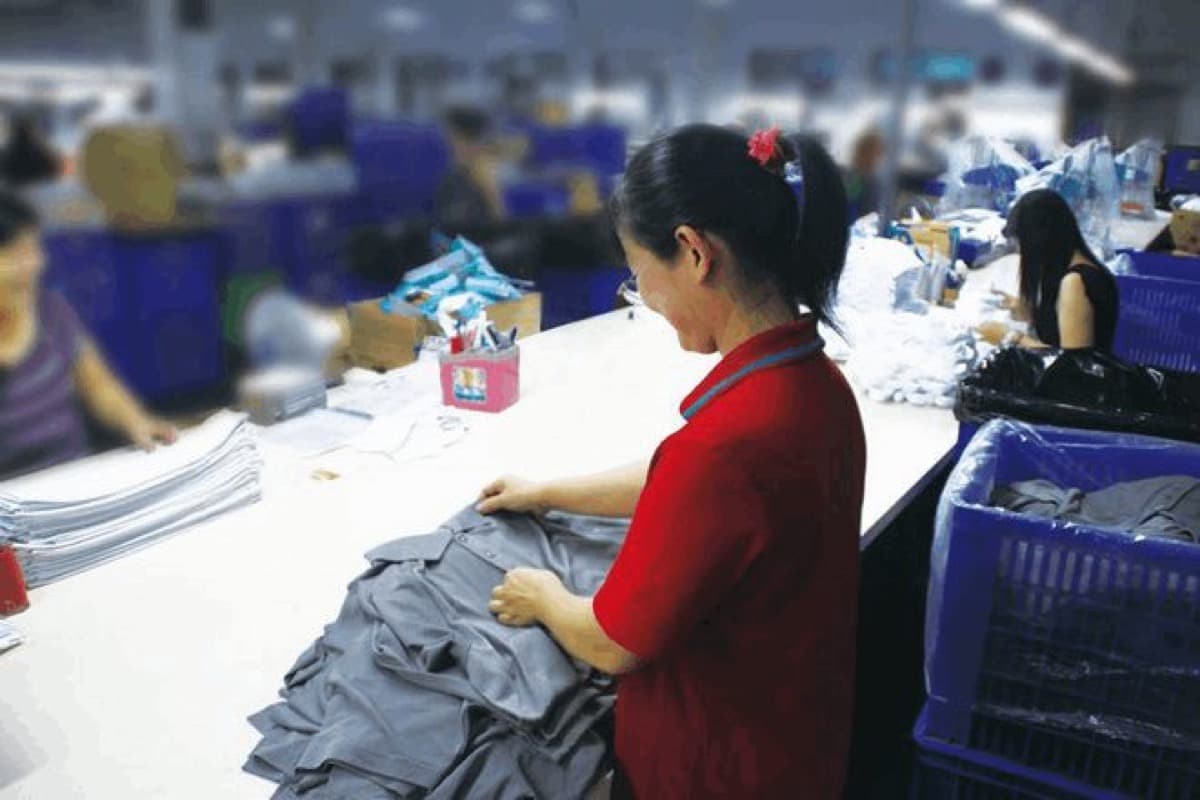
- Textiles and garments: 4–12% defect rate without systematic inspections. The industry average for inspected shipments is 3–5%.
- Consumer electronics: 2–8% defect rate depending on product complexity. Functional defects (connectivity, battery, software) account for roughly 40% of failures.
- Furniture and home goods: 5–15% defect rate on uninspected shipments. Common issues include finish defects, assembly hardware mismatches, and dimensional inconsistencies.
- Toys and children's products: Safety-critical defects carry outsized costs due to recall liability. A single batch with lead paint or choking hazards can result in six-figure recall costs.
Case Study Benchmarks
These real-world results illustrate the ROI quality control can deliver:
European fashion retailer: A mid-sized retailer sourcing garments from five factories in China reduced their defect rate by 40% (from 12% to 7.2%) through systematic during-production and pre-shipment inspections. The result: €85,000 per season in avoided returns and markdowns. The inspection program cost a fraction of those savings.
Amazon FBA electronics seller: An FBA seller facing a 4.2% chargeback rate — well above Amazon's 1% suspension threshold — implemented FBA-specific inspections across three Shenzhen factories. Chargebacks dropped 65% to 1.5% within four months. OTIF scores improved from 89% to 97%. The inspection program cost less than two months of previous chargeback losses.
DTC furniture brand: A multi-country brand with an 11% return rate (costing $400,000 annually) implemented a vendor scorecard quality program across six factories in Vietnam, India, and China. Returns dropped 58% to 4.6%, saving $230,000 per year. The program also enabled supplier consolidation from six to four factories, further reducing management complexity.
The 5% Rule of Thumb
Here's a practical decision rule:
When the cost of inspections is 5% or less of your order value, use inspections.
For example: a $50,000 order inspected at $240 per man-day typically requires 1–2 inspection days ($240–$480). That's less than 1% of order value — a clear yes. Even for a $5,000 order, a single $240 inspection represents 4.8% of order value, which is still within the threshold.
Inspections stop making financial sense when:
- The order value is very small (under $2,000) and the product has low defect risk
- You have an established, proven supplier with a consistent track record over dozens of shipments
- The product is commodity-grade and defect tolerance is high
For most importers sourcing $10,000+ orders from overseas factories, the math overwhelmingly favors inspections.
How to Calculate Your Own QC ROI
Follow these steps to estimate the ROI for your specific situation:
Step 1: Estimate Your Annual Defect Costs
Add up all defect-related expenses over the past 12 months:
- Cost of defective units (wholesale value × defect rate × number of units)
- Return processing costs (number of returns × average return cost)
- Chargeback and marketplace penalty fees
- Customs delays or rejections
- Replacement production and shipping costs
If you don't have exact numbers, use the industry benchmarks above as starting estimates. Most buyers who track carefully find their true defect costs are 2–3x higher than they initially estimated.
Step 2: Estimate Your Annual Inspection Costs
Calculate the cost of a systematic inspection program:
- Number of shipments per year × inspection days per shipment × cost per man-day
- For a flat-rate provider like Tetra Inspection, this is straightforward: at $240 per man-day, 50 annual shipments requiring one inspection day each = $12,000 per year
- Subscription plans reduce costs further — from $189/man-day (Monthly) to $158/man-day (Annual)
Step 3: Estimate the Defect Reduction
Systematic inspections typically reduce defect-related costs by 40–65%, based on industry benchmarks and the case studies above. Use 40% as a conservative estimate for your first year.
Step 4: Calculate ROI
Plug the numbers in:
- Defects avoided = Current annual defect costs × 40% (conservative)
- Net savings = Defects avoided − Annual inspection costs
- ROI = Net savings ÷ Annual inspection costs × 100
Example: A brand with $80,000 in annual defect costs, spending $12,000 on inspections, conservatively avoiding 40% of defects:
- Defects avoided: $80,000 × 40% = $32,000
- Net savings: $32,000 − $12,000 = $20,000
- ROI: $20,000 ÷ $12,000 × 100 = 167% ROI
When Inspections Don't Pay Off
Intellectual honesty matters. Inspections aren't always the right investment:
- Very low-value, low-risk goods: If you're importing $1,000 of generic commodity items with a 2% defect rate, the $240 inspection cost may exceed the $20 in potential defect losses.
- Trusted suppliers with proven track records: After years of consistent quality across dozens of shipments, you might reduce inspection frequency (but never eliminate it entirely — supplier quality can drift).
- Products with high defect tolerance: If minor cosmetic variations are acceptable and there are no safety or compliance concerns, the ROI case weakens.
For everyone else — brands importing $10,000+ orders, FBA sellers protecting account health, retailers with compliance requirements, or anyone sourcing from new suppliers — the ROI of quality control inspections is overwhelmingly positive.
Want to run the numbers for your specific supply chain? Try our ROI Calculator to estimate your potential savings, or request a free quote to see what a Tetra Inspection program would cost for your shipments.
Tetra Inspection provides pre-shipment inspection, during production inspection, and factory audit services across Asia — including extensive quality control in China. Learn more about how AQL sampling works in our AQL calculator and sampling guide.
Tetra Inspection
Quality control experts at Tetra Inspection, helping businesses protect their supply chains with reliable inspection services across 45+ countries worldwide.
Need Help With This?
Our inspectors handle this across 45+ countries with 48-hour scheduling.
Get Inspection Insights
Monthly quality tips and industry data.